

Are you searching for a high-performance solution to synchronize your payroll, finances, inventory, and complex operations? If so, an Enterprise Resource Planning (ERP) software solution remains the gold standard for business efficiency.
However, as we move through 2026, the landscape has shifted. It is no longer just about “going digital”; it is about “going intelligent.” With AI-driven automation and real-time data analytics now being the baseline, finding the right ERP software in Singapore can feel overwhelming given the sheer volume of sophisticated options.
But you can breathe a sigh of relief! We have done the heavy lifting for you. We analyzed the market, focusing on localized compliance (IRAS/CPF), AI integration, scalability, and affordability.
Here is our curated list of the 8 best ERP software in Singapore for 2026.
1. SAP: The Intelligent Enterprise Leader
SAP continues to dominate the global and local markets as a pioneer in modular ERP frameworks. In 2026, SAP has doubled down on Business AI, embedding machine learning directly into core processes to predict supply chain disruptions before they happen.
SAP provides two primary paths for Singaporean businesses:
-
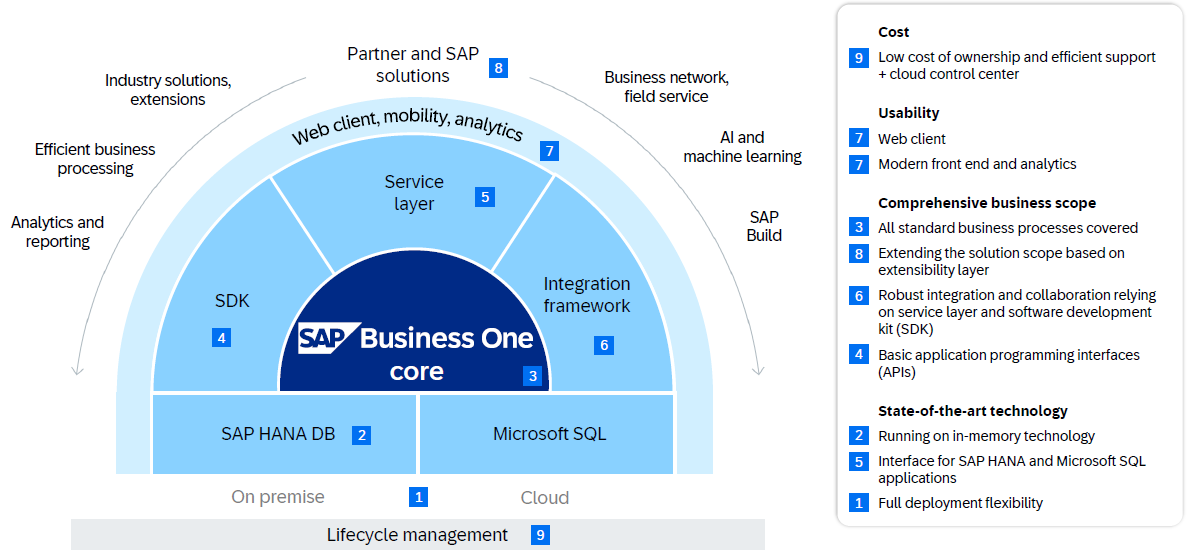
SAP Business One: This remains the “sweet spot” for SMEs (1–500 employees). It offers a cost-effective, all-in-one solution that grows alongside your company.
-
SAP Grow/SAP S/4HANA Public Cloud Edition: Built for growth-focused companies that refuse to choose between a starter ERP they’ll quickly outgrow and overinvesting in complexity they’re not ready for.
Why it’s a 2026 Top Pick: SAP’s local ecosystem in Singapore is unmatched. If you want to explore these options, Axxis Consulting stands out as the leading SAP partner. They bring decades of industry-specific expertise to ensure your implementation isn’t just a software install, but a strategic upgrade.

Also read:
1. SAP B1 HANA vs. SAP S/4HANA
2. SAP S/4HANA Cloud implementation in Singapore
2. Epicor: Precision for Industry 4.0
Epicor secures the second spot by focusing heavily on the “makers and movers.” If your business operates in manufacturing or distribution, Epicor’s deep industry-specific functionality is hard to beat.
In 2026, Epicor has evolved its “Kinetic” interface to be more intuitive, utilizing low-code tools so your staff can customize dashboards without a computer science degree.
Key 2026 Features:
-
Cognitive Inventory Management: Uses AI to suggest optimal stock levels based on predictive global demand.
-
Localized Workforce Management: Automatically stays updated with the latest Singapore Ministry of Manpower (MOM) regulations.

3. Oracle NetSuite: The Cloud Native
Oracle NetSuite remains the world’s most deployed cloud ERP. Because it was born in the cloud, it avoids the “clunkiness” of older systems that were later migrated to the web.
NetSuite excels at providing a “Single Version of the Truth.” Whether you are a fast-growing e-commerce startup or an established retail chain, NetSuite’s unified platform ensures your sales data and financial reports never disagree. High-growth brands like GoPro and local Singaporean scale-ups rely on its seamless scalability.

Also read:
SAP Vs. Oracle
SAP Business One vs NetSuite for SMEs
4. IFS Cloud: Excellence in Complex Projects
IFS AB (now primarily branded as IFS Cloud) is the go-to choice for Singapore’s construction, engineering, and aerospace sectors. While other ERPs try to be everything to everyone, IFS focuses on asset-intensive industries.
In 2026, their “Evergreen” model is a standout feature. It eliminates the “big bang” upgrades of the past, providing small, frequent updates that keep your system modern without disrupting your operations. Their remote assistance features also allow field service technicians in Singapore to use AR (Augmented Reality) to fix equipment while synced to the ERP.

5. Infor CloudSuite: Industry-Specific Elegance
Infor has gained significant ground in Singapore by moving away from “generic” ERPs. They offer CloudSuites tailored specifically for industries like Food & Beverage, Healthcare, and Fashion.
Recently recognized as a leader in the Gartner® Magic Quadrant™, Infor uses its “Coleman AI” to automate repetitive tasks. For a medium-sized Singaporean distributor, this means the software can automatically reconcile bank statements or suggest pricing adjustments based on real-time competitor data.

If you are a medium or small enterprise, it can be a great solution for you. Some unique features that set it apart from other ERPs are its cloud-based platform, real-time accessibility, scalability to meet your business needs, and machine learning capabilities.
Infor comes with intelligent modules for businesses catering to financial management, supply chain management, project management, and customer relationship management.
It was recognized as a Leader in the 2021 Magic Quadrant for Cloud ERP for Product-Centric Enterprises and is also trusted by top brands, including GE Appliances, S&C Electric, and Bimbo Bakeries USA.
6. Brightpearl by Sage: The Omnichannel Specialist
If you are a retail merchant operating on Shopify, Amazon, and Shopee simultaneously, Brightpearl is your best friend. While traditional ERPs struggle with the high-velocity world of modern retail, Brightpearl was built for it.
In 2026, its “Automation Engine” is its crown jewel. It can automate up to 90% of post-purchase operations, from warehouse routing to shipping labels. This allows Singaporean retailers to focus on brand building rather than manual data entry.

This allows merchants to spend their time and money on more productive tasks, such as increasing sales.
Bright Pear has multiple modules that support sales management, financials, and CRM in a single window. Moreover, you can find advanced analytics & reporting features for quick decision-making and wide integrations with other e-commerce platforms like Shopify, Amazon, eBay, and BigCommerce.
Brightpearl has been recognized as a leader in retail CRM by the Top industry analysts and has won several awards for its performance and capabilities.
Some top international brands that have shown their trust in Brightpearl include JBL, Bose, Happy Socks, and Fat Face.
7. Sage X3: Power and Flexibility
Sage X3 offers a unique middle ground for businesses that need more power than basic accounting software but find SAP S/4HANA too complex. It is highly regarded for its multi-currency and multi-country capabilities, making it ideal for Singaporean firms with offices across Southeast Asia.
Sage X3 has spent the last year improving its “Data Hub,” which provides incredible visualization of financial health. It remains a sturdy, reliable choice for manufacturing and chemicals.

Also read: SAP Business One Vs. Sage
8. Zoho ERP: The SME Champion
Zoho has disrupted the Singaporean market by offering a “Lego-like” approach to ERP. You can start with their CRM and gradually add finance, inventory, and HR modules as you grow.
Why Singaporean SMEs love it:
-
Affordability: It offers one of the lowest total costs of ownership on this list.
-
Mobile-First: Their mobile apps are arguably the best in the industry, allowing business owners to approve expenses or check stock while on the MRT.

2026 ERP Comparison Table: Singapore Market
| ERP Software | Best For | Standout 2026 Feature | Scalability |
| SAP (B1 / S4HANA) | All-rounders & Conglomerates | Predictive AI: Anticipates supply chain shifts before they hit. | High (Global standard) |
| Epicor | Manufacturing & Distribution | Industry 4.0 Integration: Direct IoT sensor-to-ERP sync. | Medium-High |
| Oracle NetSuite | Fast-growing Tech & Retail | SuiteBanking: Real-time automated local bank reconciliation. | High (Cloud-native) |
| IFS Cloud | Construction & Engineering | AR Field Service: Remote equipment repair via smart glasses. | High (Asset-focused) |
| Infor CloudSuite | Food, Bev & Healthcare | Micro-vertical focus: Deep niche compliance out-of-the-box. | Medium-High |
| Brightpearl | Multi-channel E-commerce | Hyper-automation: Automates 90% of order processing. | Medium (Retail focus) |
| Sage X3 | Regional Mid-market Firms | Multi-Legislation: Seamlessly manages SG, MY, and TH tax. | Medium-High |
| Zoho ERP | Small Businesses & Startups | Unified Ecosystem: One login for HR, CRM, and Finance. | Medium (Best for SMEs) |
Understanding the ERP Lifecycle in 2026
Finding the ideal ERP software in Singapore is no longer a “one size fits all” journey. Your choice depends on your specific industry niche and your digital maturity. Modern ERP implementation is no longer a “one-and-done” project. In 2026, the lifecycle revolves around continuous data refinement. When you select a system, you are essentially choosing the “brain” of your business that will learn from your historical data to provide better forecasts each year.
If you want a safe, powerful, and locally supported bet, SAP remains the gold standard. However, if your focus is purely on high-volume retail or heavy construction, Brightpearl or IFS might serve you better.
Selecting the software is only 40% of the battle; the remaining 60% lies in a successful implementation. Since you are looking at the Singapore market, local support is non-negotiable for staying compliant with IRAS and CPF updates.
This is where Axxis Consulting provides a critical advantage as a premier implementation partner in Singapore. As an SAP Platinum Partner, they offer the deep technical expertise and local regulatory knowledge required to bridge the gap between powerful software and a high-functioning, compliant business operation.
Why the Right Partner Matters in 2026
An ERP is only as good as the team that configures it. In the Singaporean context, a partner like Axxis Consulting ensures your digital transformation includes:
- E-Invoicing Readiness : Seamless integration with InvoiceNow and Peppol standards.
- Tax Compliance : Automated GST reporting that meets the latest IRAS requirements.
- Regional Strategy : Expert guidance for firms scaling across the Singapore and Malaysia markets.
Now that you have the landscape of the 8 best ERP software in Singapore, the next logical step is to see how they fit your specific business metrics.
FAQs: Best ERP Software in Singapore
For most SMEs, SAP Business One and Zoho are the top contenders due to their balance of power and price.
Most major providers like SAP, Sage, and Oracle are “IRAS-compliant,” meaning they can generate the necessary IAF (Audit Files) required by Singaporean tax authorities.
In 2026, Cloud ERP is the standard. It offers better security, automatic updates, and lower upfront hardware costs compared to traditional on-premise setups.