





The countdown to the December 31, 2027, SAP ECC end-of-mainstream-support deadline has officially shifted from a technical “IT task” to a high-stakes boardroom priority. For enterprises across Singapore and Malaysia, the strategic choice is no longer if you will migrate to the cloud, but how you will execute that transition without inheriting a decade of technical debt.
If you attempt to migrate your legacy “spaghetti code” directly to the cloud, you are simply moving a cluttered, inefficient attic into an expensive new mansion. To unlock the genuine power of a modern ERP, you must adopt a Clean Core Strategy.
This guide explores why 2026 is the “point of no return” for this transition and how it serves as the essential prerequisite for AI-readiness, ESG compliance, and regional growth.
What Exactly is the SAP Clean Core Strategy?
In the legacy era of ERP, businesses heavily customized their SAP environments using “Z-programs” and invasive core modifications. While these custom scripts solved immediate operational gaps, they created a rigid “Dirty Core.”
This architecture made system upgrades complex, expensive, and notoriously risky. Essentially, the custom code became “glued” to the standard SAP functions, meaning any update to the standard software would break the custom features.
Clean Core is a modern architectural philosophy that breaks this cycle. It ensures your central ERP remains as standard as possible—exactly as SAP intended. Under this model, you build your unique business innovations “side-by-side” using the SAP Business Technology Platform (BTP). By decoupling your custom logic from the transactional heart of the system, you ensure that your ERP stays “upgrade-stable” and “innovation-ready.”
The Business Case for a Clean Core:
-
Rapid Innovation: You adopt SAP’s continuous cloud updates instantly. Instead of six months of painful regression testing, you consume new features in days.
-
Reduced Total Cost of Ownership (TCO): You eliminate the “Upgrade Tax”—the recurring cost of manually fixing broken custom code every time you patch the system.
-
Enhanced Cybersecurity: Standardized systems align perfectly with SAP’s modern security patches. This drastically reduces your exposure to regional ransomware threats targeting unpatched legacy systems.
-
Scalability: A clean core allows you to roll out standardized processes across Singapore, Malaysia, and global branches without regional code conflicts.
Why 2026 is the “Point of No Return” for Regional Enterprises
Both the Singaporean and Malaysian markets are entering a period of extreme consultant scarcity. As thousands of companies rush toward the 2027 deadline, the demand for certified SAP S/4HANA experts is skyrocketing. If you wait until 2027 to start, you will compete for a dwindling pool of talent, likely resulting in higher implementation costs and compromised quality.
The Prerequisites: Why AI and ESG Require a Clean Core
In 2026, Singapore and Malaysia lead the ASEAN region in AI adoption and sustainability mandates. However, these advanced technologies cannot run effectively on “dirty” data or non-standard processes.
1. Unlocking the Power of SAP Joule and AI Agents
SAP’s AI co-pilot, Joule, and the new wave of Agentic AI require standardized data structures to function. If your core is cluttered with 20 years of custom code that bypasses standard business objects, your AI will produce “hallucinations” or incorrect insights.
A Clean Core ensures your data remains transparent, structured, and accessible. Consequently, this allows AI to automate complex tasks like:
- Predictive Liquidity: Analyzing historical patterns to predict cash flow bottlenecks before they happen.
- Supply Chain Simulation: Automatically simulating alternative sourcing routes during global shipping disruptions.
- Smart Procurement: Using AI agents to negotiate or flag price anomalies based on standardized purchase history.
2. The Green Ledger: Financial-Grade Sustainability
Regulatory pressure for ESG (Environmental, Social, and Governance) reporting has reached a fever pitch. Singaporean listed firms (SGX) and large Malaysian enterprises now face mandatory, audit-ready disclosures.
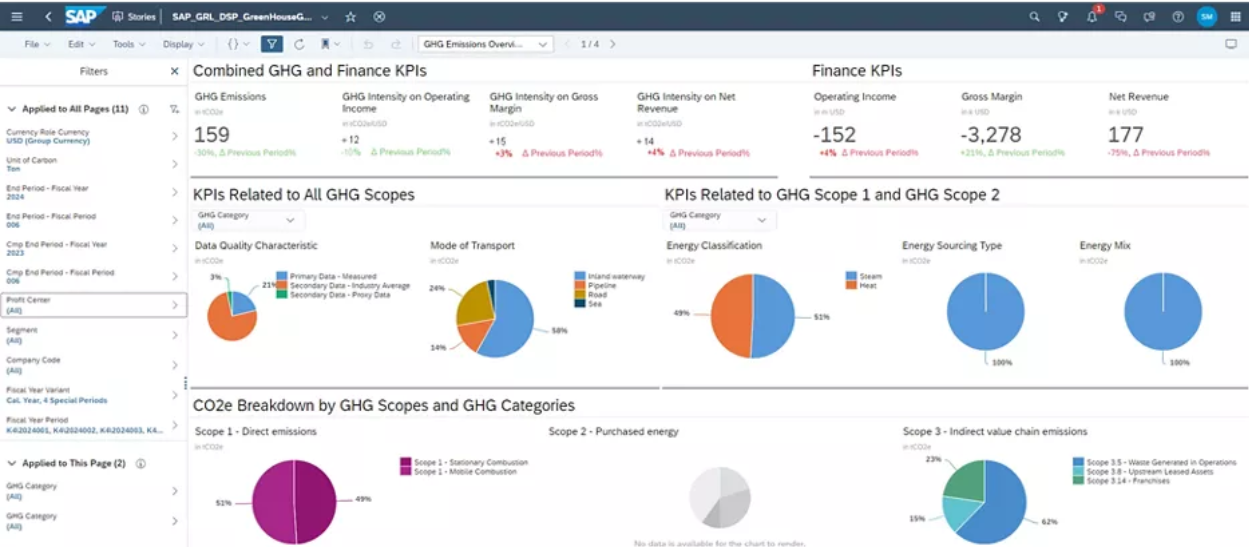
A Clean Core strategy enables the SAP Green Ledger. This revolutionary approach treats “Carbon like Cash,” allowing you to track environmental impact with the same rigor as financial transactions. When your core is clean, carbon data (Greenhouse gas, GHG) flows automatically from your procurement and manufacturing modules directly into your final sustainability report. This eliminates the manual Excel reconciliation that often leads to “greenwashing” risks and costly audit failures.
The Axxis Consulting Roadmap: 4 Steps to a Future-Proof Core
As an SAP Platinum Partner with deep implementation roots in Singapore and Malaysia, Axxis Consulting helps enterprises navigate this transition using the proven SAP Activate methodology. We don’t just move your data; we modernize your business logic to ensure you are ready for the 2030s.
Step 1: The “Custom Code Detox”
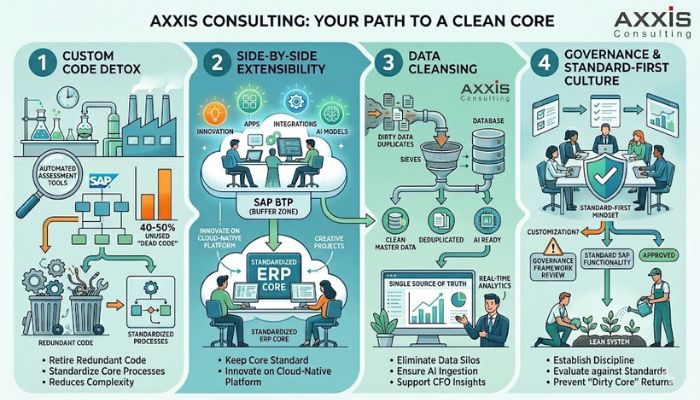
We begin by analyzing your current landscape using automated assessment tools. Statistically, we find that 40% to 50% of custom code in regional SAP systems is no longer even in use. It is “dead code” that still costs money to maintain. Axxis Consulting helps you Retire the redundant code and Standardize your core processes. This “detox” significantly reduces the complexity of your migration.
Step 2: Side-by-Side Extensibility with SAP BTP
For the custom logic that provides your unique competitive edge, we move it to SAP BTP. Think of BTP as a “buffer zone” where your developers can innovate. This keeps your ERP core “Standard” while giving your team a modern, cloud-native environment to build apps, integrations, and AI models without risking system stability.
Step 3: Data Cleansing and Semantic Modeling
We eliminate data silos by ensuring your master data is clean, deduplicated, and ready for AI ingestion. A Clean Core is only as powerful as the data flowing through it. Our team ensures your data architecture supports real-time analytics from day one, allowing your CFO to see a “Single Source of Truth” across all regional operations.
Step 4: Governance and a “Standard-First” Culture
A Clean Core is a discipline, not a one-time project. Axxis Consulting helps your team establish a “Standard-First” mindset. We implement governance frameworks where all future business requirements must be evaluated against standard SAP functionality before any customization is allowed. This prevents the “Dirty Core” from returning and keeps your system lean for years to come.
The Strategic Advantage of Acting Now
Beyond the technical benefits, a Clean Core strategy provides a competitive “moat.” In a rapidly changing economy, the ability to pivot is your greatest asset. Companies stuck in legacy code will spend 80% of their IT budget just “keeping the lights on.” Conversely, companies with a Clean Core can spend that same budget on innovation, AI agents, and customer experience.
Furthermore, as a regional partner, Axxis Consulting understands the specific compliance needs of the Singapore and Malaysia markets. We ensure that your standardized core still meets local tax, audit, and reporting requirements without requiring invasive “Z-coding.”
Conclusion: Will You Be Ready for 2027?
As we move through 2026, the technical landscape will only become more competitive. The 2027 deadline is a hard stop, but the benefits of a Clean Core are a head start. Starting your Clean Core journey today allows you to avoid the “Deadline Crunch” while building a system that is actually capable of competing in an AI-driven, data-first economy.
You are not merely upgrading your software; you are upgrading your business’s fundamental ability to adapt. Stop maintaining the problems of the past. Start building the agility of the future with a partner who understands both the global SAP standard and the local regulatory landscape.
Don’t let technical debt hold your business back. Book a 15-minute Clean Core Assessment with the Axxis Consulting regional team today. We will analyze your current technical footprint, identify redundant code, and provide a high-level roadmap for your 2027 transition.